Microneedling vs. RF Microneedling
Traditional microneedling, also called collagen induction therapy, uses fine sterile needles to create controlled micro-injuries in the skin.

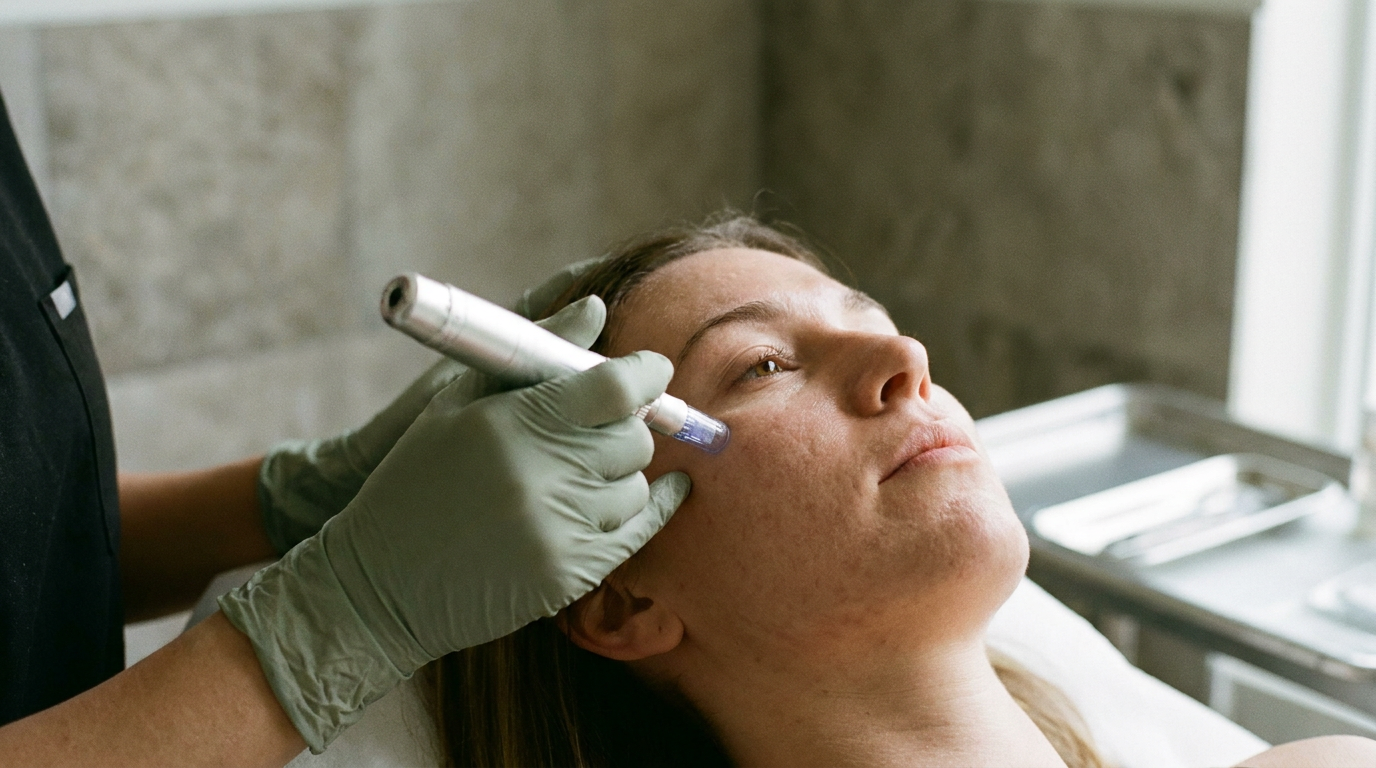
Traditional Microneedling Explained
Traditional microneedling, also called collagen induction therapy, uses fine sterile needles to create controlled micro-injuries in the skin. These tiny punctures trigger your body's natural wound healing response, stimulating new collagen and elastin production.
A device containing multiple fine needles is moved across the skin, creating thousands of microscopic channels. Your body perceives these micro-injuries as wounds and responds by:
Releasing growth factors
Recruiting fibroblasts to the treatment area
Producing new collagen and elastin
Remodeling existing tissue
The process takes place primarily in the epidermis and upper dermis. As the skin heals over the following weeks, new tissue forms that is smoother, firmer, and more even in tone.
What traditional microneedling treats:
Fine lines and early wrinkles
Mild acne scarring
Enlarged pores
Uneven skin texture
Hyperpigmentation and stretch marks
Treatment Details
Depth: 0.5mm to 2.5mm (adjustable)
Sessions needed: 3 to 6 for optimal results
Session spacing: 4 to 6 weeks apart
Downtime: 1 to 3 days of redness
RF Microneedling Explained
RF microneedling combines traditional microneedling with radiofrequency energy. The needles not only create micro-channels but also deliver controlled heat deep into the dermis, amplifying the collagen-stimulating effect.
Insulated needles penetrate the skin to precise depths, emitting thermal energy that heats the surrounding tissue to 60 to 70 degrees Celsius. This energy:
Causes immediate collagen contraction for an instant tightening effect
Denatures existing collagen, triggering replacement with new collagen
Stimulates fibroblasts more intensely than mechanical injury alone
Reaches deeper dermal layers than needles alone
What RF microneedling treats:
Moderate to severe acne scarring
Deeper wrinkles and folds
Skin laxity and sagging
Jowling and jawline definition
Neck skin tightening and crepey skin
Treatment Details
Depth: 0.5mm to 4mm+ (device dependent)
Sessions needed: 3 to 4 for optimal results
Downtime: 2 to 5 days of redness and potential swelling
Results timeline: Initial results in 2 to 4 weeks, peaking at 3 to 6 months
Key Differences
Technology and Mechanism
Traditional microneedling relies solely on the wound healing cascade triggered by physical needle punctures. RF microneedling adds a second stimulus through thermal injury, which research shows enhances fibroblast activity and collagen denaturation.
Depth of Treatment
Traditional microneedling works primarily in the epidermis and upper dermis. Skinfolio professionals can adjust needle settings, but mechanical injury alone has limited reach compared to energy-based treatments.
RF microneedling can treat significantly deeper. The radiofrequency energy travels beyond the needle tip, affecting tissue in a zone around each puncture point. This allows treatment of the deep dermis and even subdermal tissue.
Downtime and Recovery
Traditional Microneedling: 1 to 3 days of redness, similar to a mild sunburn. Most people return to normal activities the next day with makeup coverage.
RF Microneedling: 2 to 5 days of more pronounced redness and potential swelling. The thermal component creates more inflammation initially, and some patients experience tiny crusting at entry points.
When to Choose Which
Choose traditional microneedling if you have fine lines, mild texture concerns, enlarged pores, or light hyperpigmentation. It is also an excellent choice for those with a lower budget or limited time for recovery.
Choose RF microneedling if you have moderate to severe acne scarring, noticeable skin laxity, or deeper wrinkles. It is ideal for those seeking skin tightening and a more intensive corrective treatment.
Pricing Comparison
Industry average pricing in the Vancouver market:
Traditional Microneedling: Single sessions typically range from $300 to $500. Packages for multiple sessions often offer a reduced per-session rate.
RF Microneedling: Single sessions range from $700 to $1,500 due to the advanced technology and longer treatment time.
What We Offer at Skinfolio
Microneedling: Holistically rejuvenating your skin, this minimally invasive treatment triggers collagen production and allows products to penetrate deeper. It is covered by our Essential Skin and Essential Plus Memberships.
RF Collagen Stimulation: This gentle tightening treatment uses electromagnetic energy to create plumper, more defined skin without significant downtime. This is also covered by our membership options.
FAQ
What hurts more, microneedling or RF microneedling? RF microneedling is generally more uncomfortable due to the added heat sensation. Both treatments use topical numbing cream to ensure patient comfort.
Is RF microneedling safe for darker skin tones? Yes, when performed by experienced providers with appropriate settings. The insulated needle design protects the epidermis, reducing pigmentation risk compared to many laser treatments.
What should I avoid after treatment? Avoid direct sun exposure, active skincare ingredients like retinol or AHAs for 5 to 7 days, and strenuous exercise for 24 to 48 hours.
The bottom line
While traditional microneedling is excellent for surface rejuvenation and maintenance, RF microneedling provides deeper corrective benefits for scarring and skin laxity. Skinfolio offers both technologies to ensure a customized approach to your specific skin goals.
The skincare we recommend.


Personalised skin guidance
Book a complimentary consultation with a Skinfolio specialist to build a routine tailored to your goals.